


Voyager 1 reaches one light-day from Earth after nearly 50 years
NASA calculates that a radio signal now needs about 24 hours to make the one-way trip to the farthest human-made spacecraft. The distance marks a communications milestone, not an arrival at another star.
How this story was made
This story was written with AI assistance from NASA’s source documents. Its figures and quotations were checked against their sources, and Digitalage Desk reviewed and approved it before publication. It is published under the name of Peter Michaels, Editor.
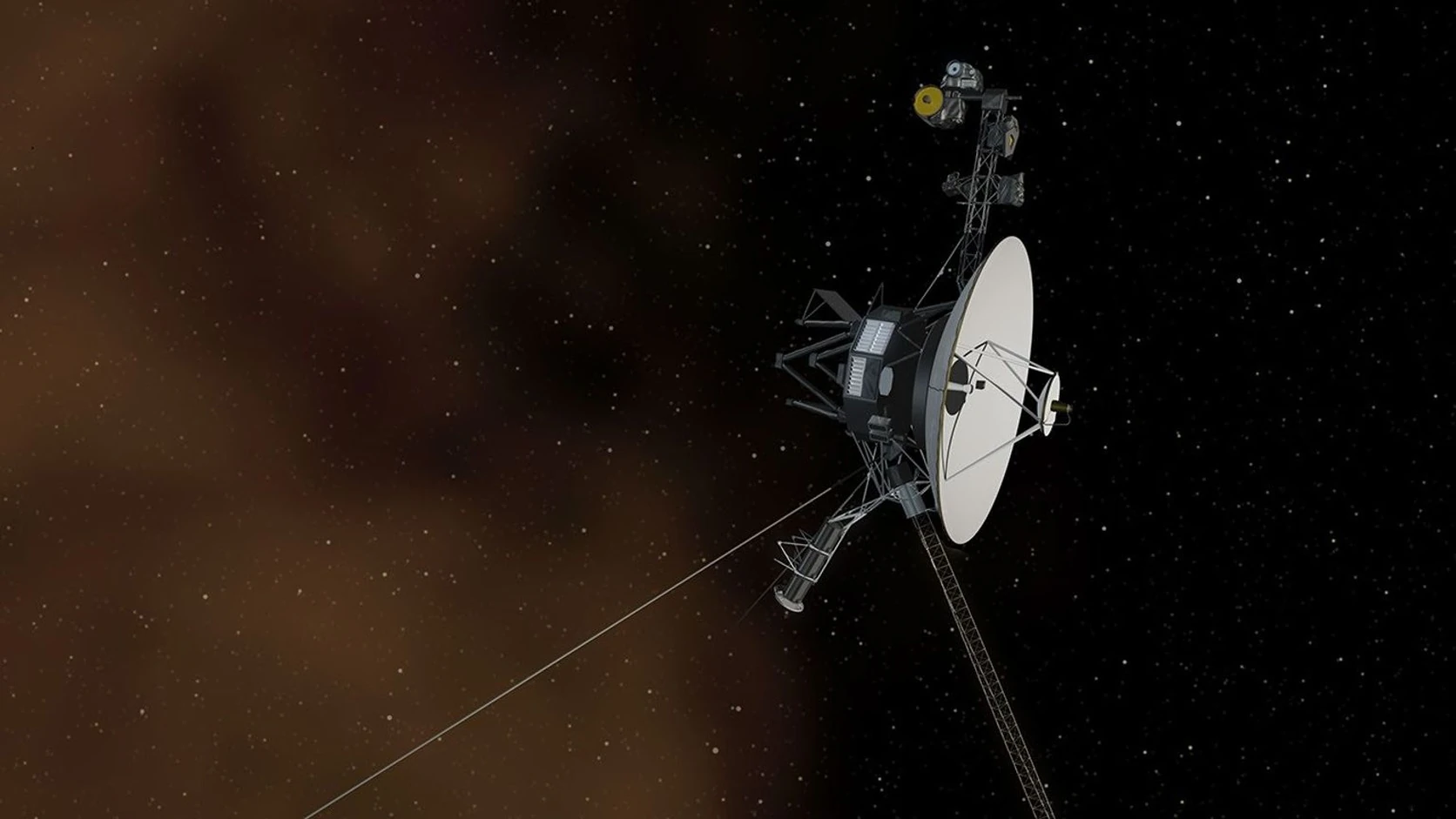
NASA’s Voyager 1 spacecraft reached the extraordinary distance of **one light-day from Earth on November 18, 2026**, according to the agency’s mission tracking and milestone information. The spacecraft, launched in 1977, is farther from Earth than any other human-made object.
NASA calculated that Voyager 1 would reach approximately **16.094 billion miles, or 25.902 billion kilometers**, from Earth at 2:16:07 a.m. Pacific time. At that distance, light and radio waves traveling through space take about **24 hours in one direction**. Commands sent from Earth require about a day to arrive, and a response sent back requires another day to return.
What one light-day actually means
A light-day is a measure of distance: how far light travels in 24 hours. It does not mean the probe traveled that distance in a day. Voyager 1 has spent nearly five decades moving away from Earth, at roughly 38,000 miles per hour according to NASA’s milestone explanation.
Primary sourceNASA: “Where are Voyager 1 and Voyager 2 Now?”NASA describes the milestone through its distance calculations, rather than a direct photograph or an instantaneous confirmation from the spacecraft. Radio transmissions from so far away require patience: information about conditions at the probe reaches the mission team roughly a day after it was sent.
Still doing science beyond the Sun’s protective bubble
Voyager 1 crossed the heliopause and entered interstellar space in 2012, moving beyond the region dominated by the solar wind. Its twin, Voyager 2, also operates in interstellar space. Together, the missions have sent observations from regions no spacecraft had previously sampled directly.
Before the long outward journey, Voyager 1 studied Jupiter and Saturn. Voyager 2 later visited Uranus and Neptune. Both spacecraft carry Golden Records containing sounds and images from Earth, a symbolic record of human civilization for an almost unimaginably long journey.
The new milestone does not mean Voyager has left the Milky Way or is close to another star. It illustrates both the scale of space and the unusual longevity of a mission that began when many of today’s communication technologies did not exist. Nearly 50 years after launch, Voyager 1 continues to extend the distance over which humans have operated a spacecraft.
End of story