


Space dust points to an ancient ice reservoir beyond Neptune
Analysis of 12 particles collected above Earth offers clues to water’s chemistry in the distant reaches of the early solar system.
How this story was made
This story was written with AI assistance from pmc.ncbi.nlm.nih.gov’s source documents. Its figures and quotations were checked against their sources, and Digitalage Desk reviewed and approved it before publication. It is published under the name of Peter Michaels, Editor.
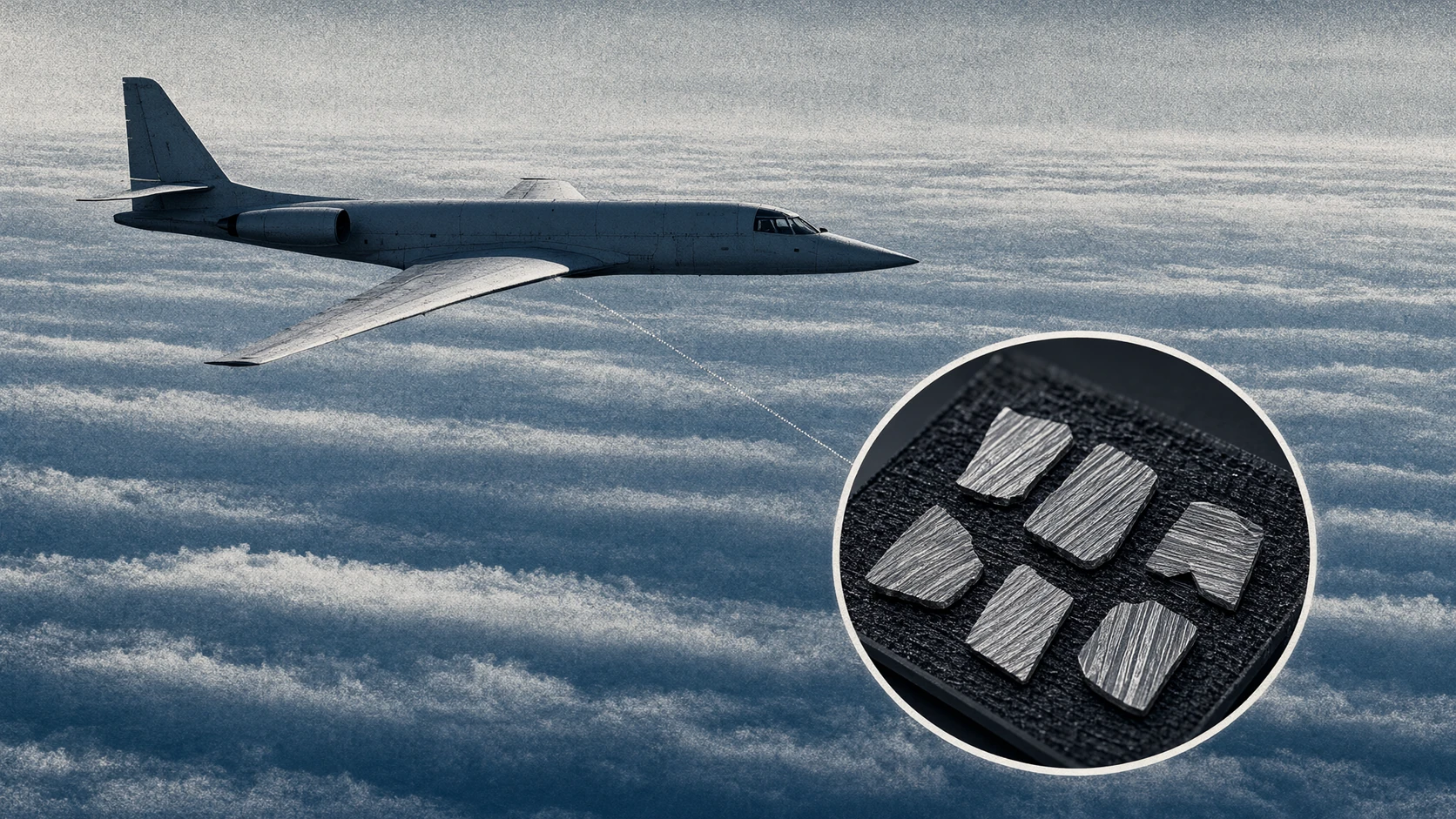
Tiny dust grains collected high above Earth have provided evidence of an ancient ice reservoir beyond Neptune, according to research highlighted by NASA on November 18.
The work examines how water and rocky material interacted as the solar system developed. Its evidence comes from minerals in 12 dust particles, rather than a spacecraft directly sampling the proposed ice reservoir.
The study, published November 11 in Science Advances, was conducted by researchers at NASA’s Johnson Space Center and the University of California, Los Angeles.
A chemical record in microscopic grains
NASA’s ER-2 research aircraft collected the particles in Earth’s stratosphere. The team used electron microscopy and UCLA’s ion microprobe to examine their minerals and oxygen chemistry. Dense tracks left by energetic particles from the Sun provided the clue linking the dust to the Kuiper Belt.
The grains contain water-altered minerals, including clays. The researchers interpreted their oxygen signatures as evidence that the water involved was enriched in oxygen-17 and oxygen-18.
These are forms of oxygen distinguished by their neutron counts. Earlier results from NASA’s Genesis mission showed that the Sun contains a greater proportion of oxygen-16 than Earth and other inner-solar-system materials. That difference gives researchers a reference for investigating how the solar system’s ingredients were distributed.
Reconstructing water that is no longer present
The team calculated the ancient water’s composition by modeling reactions between water and the minerals’ starting materials. The paper describes that estimate as an upper limit because it excludes loosely bound water that would have escaped before or during analysis.
Primary sourcepmc.ncbi.nlm.nih.gov: “A primordial heavy water reservoir in the outer solar system”NASA says the scarcity of comparable signatures in meteorites suggests the giant planets may have restricted mixing between the solar system’s inner and outer regions. The dust offers a way to investigate that separation using material that eventually reached Earth, even though its inferred birthplace lies far beyond the planets nearest the Sun.
End of story