


Satellite study finds hidden seasonal rhythms in the Amazon’s leaf cover
New research separates leaf shedding from the forest’s overall greenness, with implications for how scientists model its carbon cycle.
How this story was made
This story was written with AI assistance from Nature’s source documents. Its figures and quotations were checked against their sources, and Digitalage Desk reviewed and approved it before publication. It is published under the name of Peter Michaels, Editor.
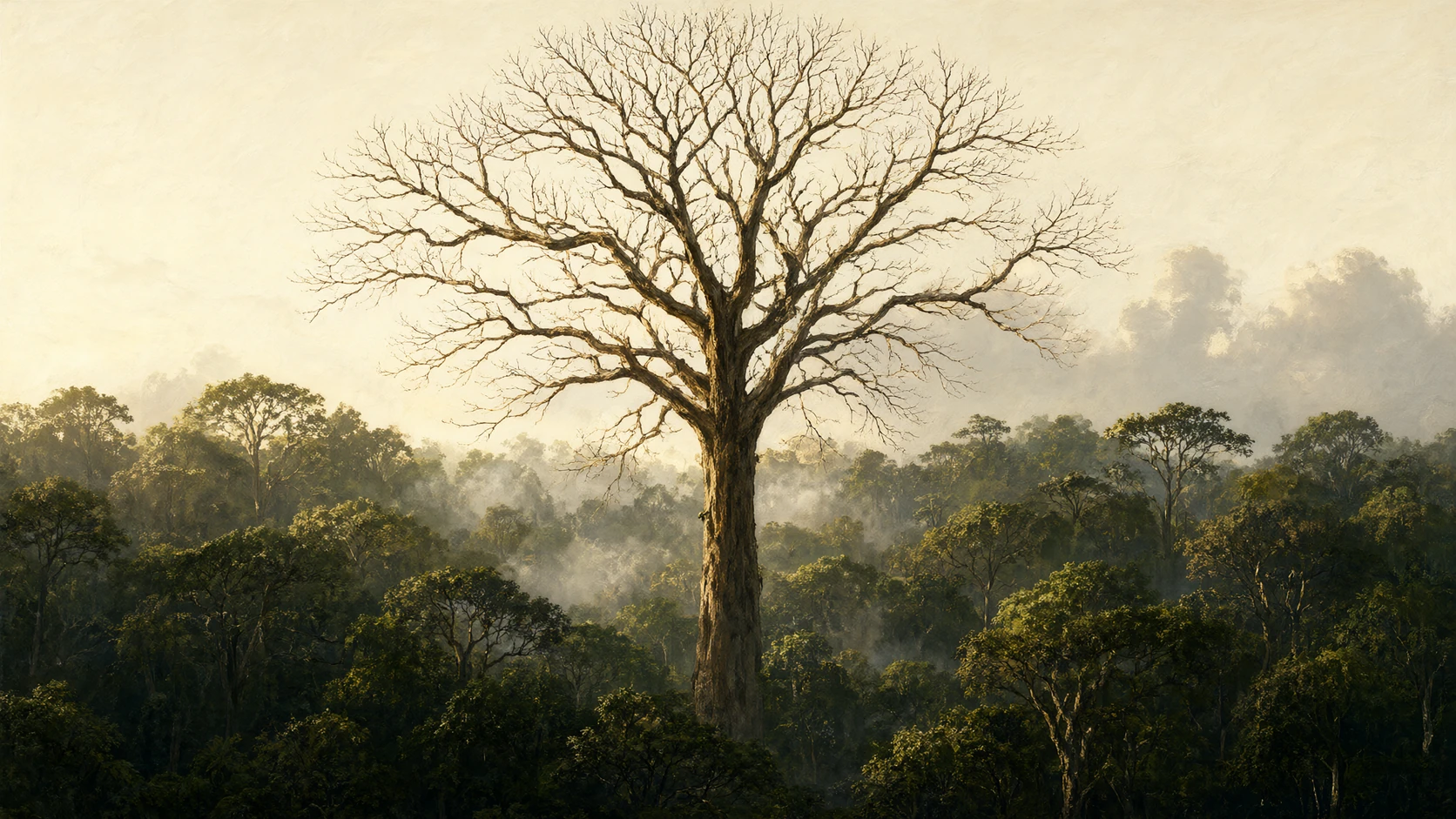
The Amazon’s green canopy conceals a more varied seasonal pattern than its evergreen reputation suggests, according to research published November 18 in Nature.
Researchers combined Sentinel-2 satellite observations at 10-meter resolution with machine learning to examine when leaves are shed and new growth emerges across the basin. Their analysis found that leaf shedding preceded new leaf growth by at least three months across 70% of the Amazon.
Greenness does not tell the whole story
That percentage describes an area-based seasonal pattern, not a simultaneous loss of every tree’s leaves.
In an accompanying scientific commentary, Gerbrand Koren explains that deciduousness refers to the interval between losing older leaves and developing fresh ones. A rainforest can therefore contain extended leafless periods that its broad evergreen classification obscures.
Koren also notes that the seasonal variation identified in the Amazon remains less pronounced than that of broadleaf forests in temperate and boreal regions. The findings refine the tropical forest’s seasonal picture rather than turning it into a northern autumn landscape.
The European Space Agency’s description of Sentinel-2 explains why the mission can help investigate such differences. Its instruments observe visible and infrared light across 13 spectral bands, with different bands providing 10-, 20- or 60-meter resolution.
Those measurements support analysis of vegetation properties such as leaf area, chlorophyll and water content. They offer several views of a canopy beyond the colors visible to the human eye. Other channels help with atmospheric corrections and cloud screening, part of interpreting observations from orbit.
A change in the carbon models
Water and climate conditions were more strongly associated with the timing differences than soil properties or light availability.
Primary sourceNature: “Nature: s41586 026 11284 y”The percentage measures improved model agreement, not a corresponding increase in carbon uptake. Leaf turnover offers another way to refine estimates of forest activity.
End of story