


Mangrove forests are regrowing, but global gains hide persistent regional losses
A four-decade satellite record shows a turnaround after 2010, while younger forests and continuing damage complicate the recovery of vital coastal habitat.
How this story was made
This story was written with AI assistance from NASA’s source documents. Its figures and quotations were checked against their sources, and Digitalage Desk reviewed and approved it before publication. It is published under the name of Peter Michaels, Editor.
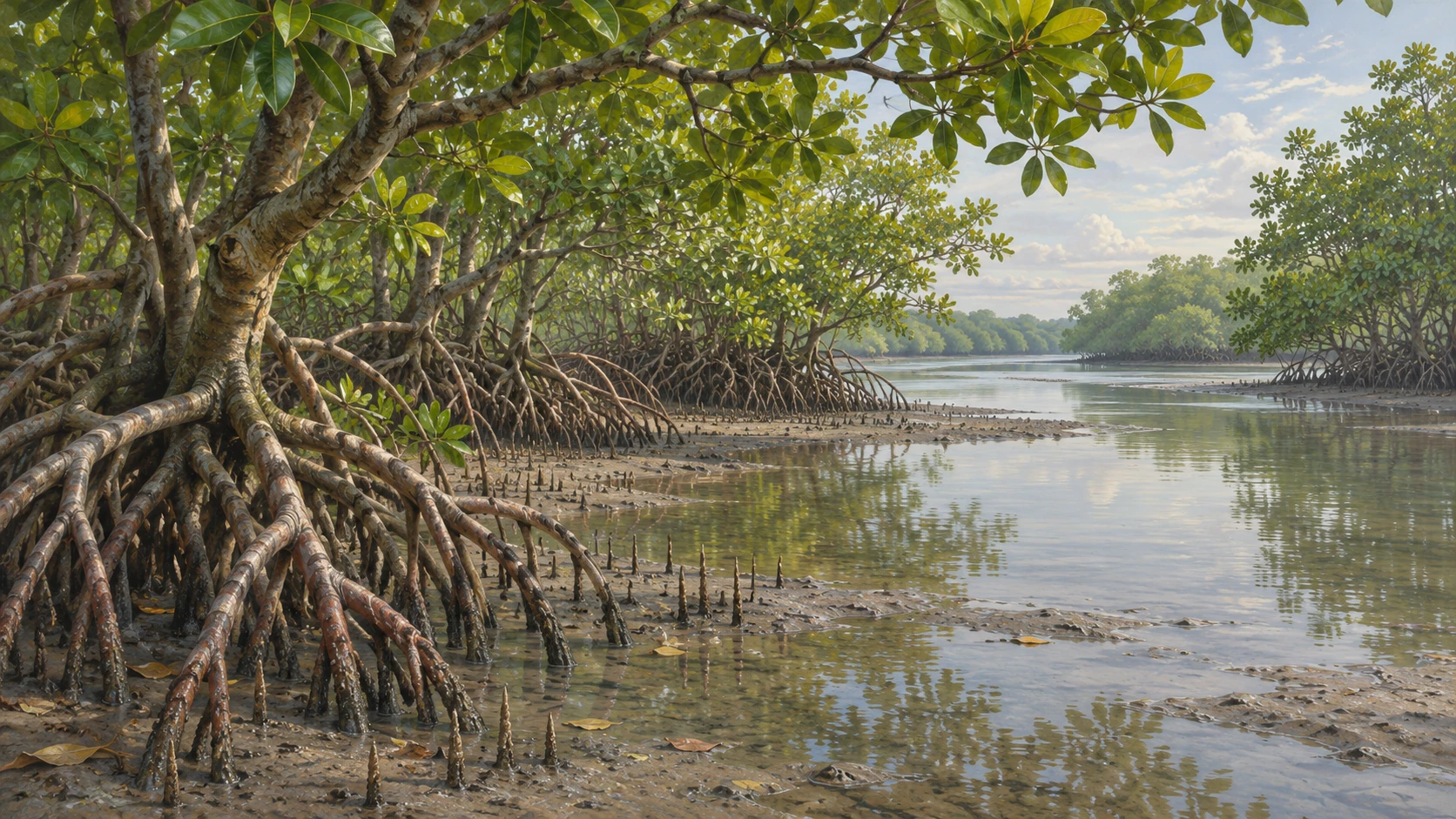
Mangroves are reclaiming parts of the coast after decades of clearance, and a NASA image comparison published November 13 shows what that recovery can look like. Landsat views of Myanmar’s Myeik District, captured in 2010 and 2026, reveal trees spreading into former rice fields and other coastal areas.
The local comparison illustrates a broader shift identified in a study published in Science in June. Researchers assembled a global annual record of mangrove extent and canopy cover from the 1980s through 2023. They found that the worldwide trend changed from net loss to net gain around 2010 as regeneration and expansion began offsetting earlier destruction.
Across the full study period, estimated mangrove extent changed by minus 0.5%, with an uncertainty of plus or minus 1.4%. The authors also found that surviving forests accumulated canopy cover. That is a more nuanced result than simply counting new trees: it tracks both how much coast mangroves occupy and whether established forest becomes denser or thinner.
NASA’s account describes nearly 3,000 square kilometers lost between 1984 and 2010, followed by nearly 2,000 square kilometers of gains. Asia, Australia and South America led the rebound. The satellite study ends in 2023; the newer Myanmar images offer a local example, not a new measurement of global coverage through 2026.
The regional pattern remains uneven. NASA reports substantial losses in the Niger Delta, contributing to declining mangrove area in West and Central Africa since 2010. Tropical cyclones have also degraded broad areas in North America and southern Africa, even while the global totals improved.
In Tulane University’s account of the research, the recovery reflects both restoration and natural processes. Mangroves can recolonize abandoned aquaculture ponds or spread onto coastal mudflats created by river sediment. Their ability to return depends on suitable conditions and space, making protection of the coastline itself part of the conservation task.
The U.S. Gulf Coast shows how quickly conditions can change. Researchers linked expansion in the Mississippi River Delta to warmer temperatures that allow mangroves to grow farther from the tropics. Yet an extreme freeze sharply reduced mangroves in Texas in 2021, demonstrating that a period of expansion does not remove vulnerability to sudden damage.
Primary sourceNASA: “A Global Rebound for Mangroves”The study identifies stopping deforestation as a priority for allowing natural regrowth. Its monitoring approach also gives conservation programs two measures to watch together: whether mangrove area survives and whether the canopy within it continues to recover.
End of story