


Howler monkeys reveal a hidden biological signal of forest fragmentation
A study of adult males in Mexico connects forest structure with gut microbes, offering a possible tool for monitoring conservation work.
How this story was made
This story was written with AI assistance from news.northwestern.edu’s source documents. Its figures and quotations were checked against their sources, and Digitalage Desk reviewed and approved it before publication. It is published under the name of Peter Michaels, Editor.
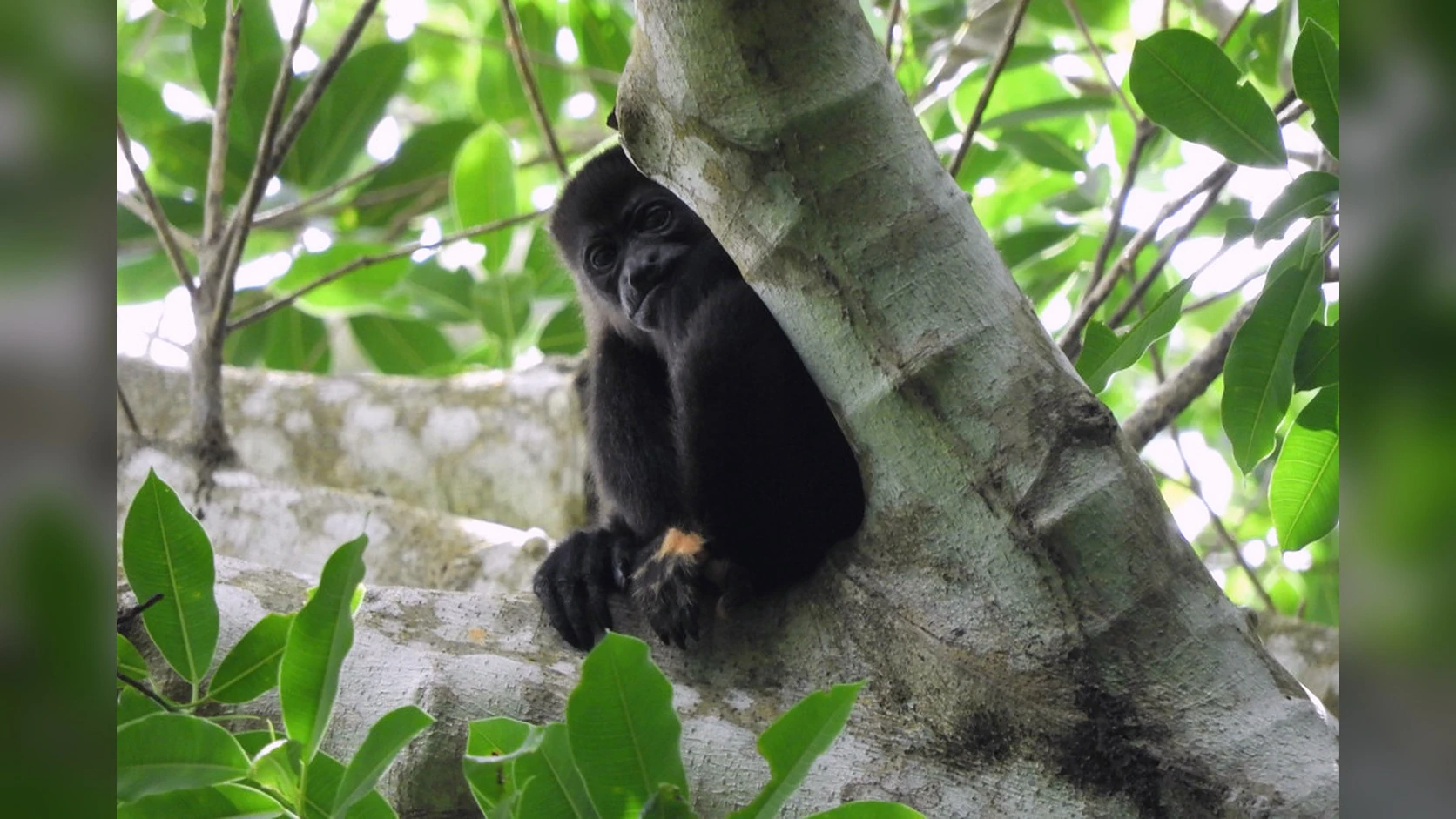
A fragmented rainforest can leave a signature inside the animals still living there. Researchers studying endangered Mexican mantled howler monkeys found that the composition of their gut microbes varied with forest characteristics, suggesting a way to examine habitat change beyond counting animals or measuring forest area.
Primary sourcenews.northwestern.edu: “Gut microbiomes of endangered primates reveal hidden toll of habitat loss”The paper’s methods show the limits behind that comparison. Fieldwork covered one wet season, October–November 2022, and only adult males. The microbiome analysis included 41 fecal samples from 32 animals; some individuals contributed more than once. Hormone and short-chain fatty-acid analyses used partially overlapping sample sets, rather than identical groups. The forest patches varied in both size and vegetation.
Microbial composition was associated with features including fragment size, tree diversity, tree diameter and connecting tree lines. The measures differed: short-chain fatty-acid concentrations and fecal stress-hormone markers did not vary significantly across fragments. This study did not establish a simple ranking of forest health from microbial differences alone.
The observational design cannot establish that changing the trees would cause a particular health improvement. Nor can results from adult males automatically describe females or young monkeys. Differences in gut communities are a possible monitoring signal, not a diagnosis of illness or proof that animals will reproduce more successfully.
The university’s account identifies practical conservation ideas: retain mature vegetation, plant a variety of trees including fruiting species, and expand connections between patches. Connected canopy gives tree-dwelling animals routes to additional feeding areas and potential mates. Those proposals have yet to be tested as outcomes of this particular study.
Collecting feces offers an advantage for continued monitoring because animals need not be captured for those samples. Lead researcher Tabor Whitney suggests repeating collections over time to assess changes alongside conservation efforts. The team is also preparing work comparing male and female microbiomes, extending a study whose first snapshot deliberately covered only males.
End of story