


Hawaii’s drilling honeycreeper puts more than its unusual bill to work
An anatomical study suggests the federally endangered ’akiapōlā’au’s legs and posture help it gouge wood, revealing adaptations beyond its striking two-part bill.
How this story was made
This story was written with AI assistance from Oxford Academic’s source documents. Its figures and quotations were checked against their sources, and Digitalage Desk reviewed and approved it before publication. It is published under the name of Peter Michaels, Editor.
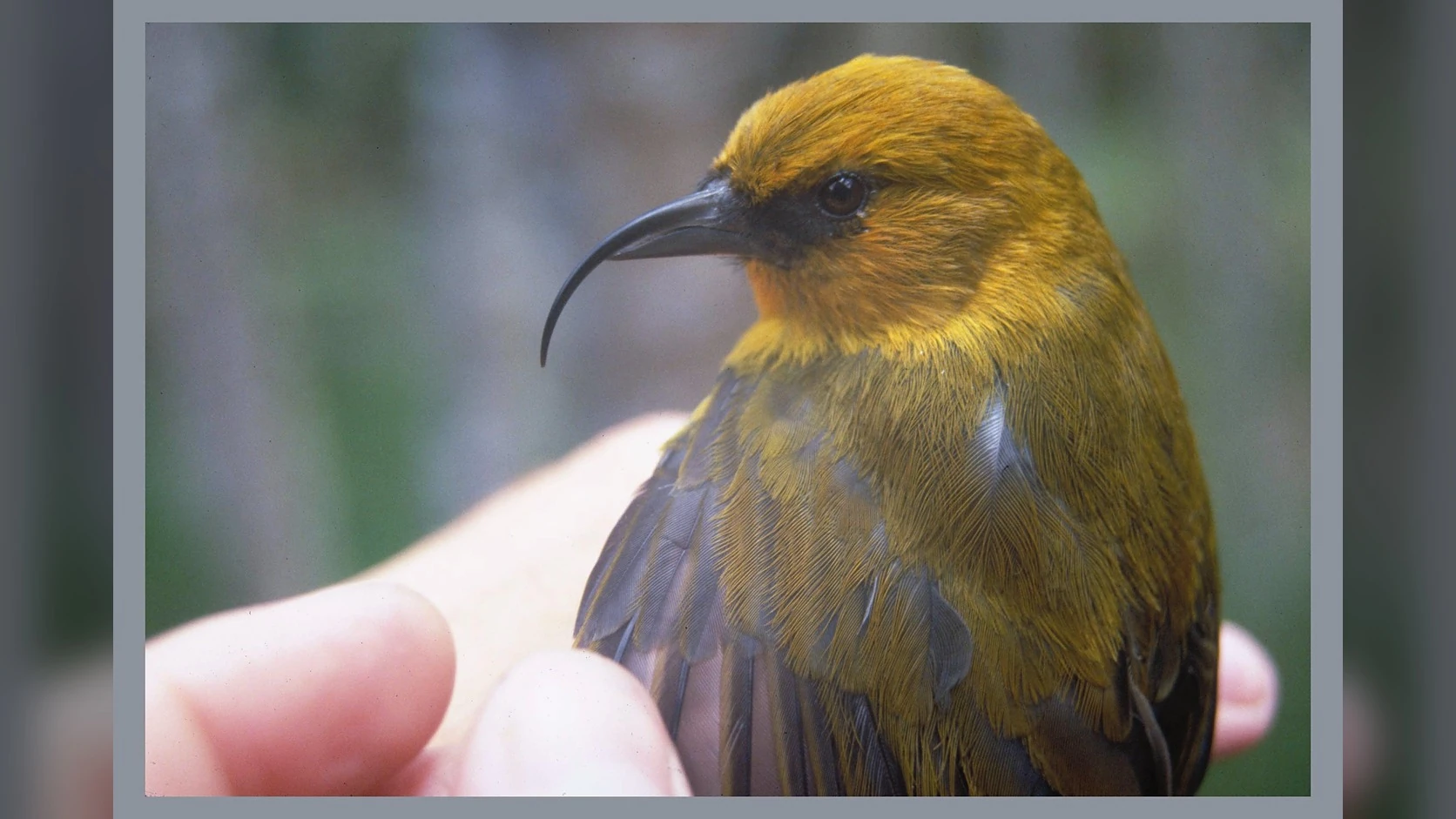
A Hawaiian bird uses one part of its bill to gouge wood and another to probe for food. New research suggests that the rest of its body, including its ankles, helps make that arrangement work.
The study published November 5 in Ornithology examined the skeletal anatomy of the ‘akiapōlā‘au. Muscle-attachment features suggest strong upward flexion at the ankle assists its digging motion. A short, robust thigh bone helps lower its center of mass against a perch.
The upper bill also has a previously unrecognized feature: its supporting bone is considerably shorter than the outer covering, a difference associated with flexibility during probing. As the Field Museum explains, the bird fills a role resembling that of woodpeckers, which are absent from Hawaii. These are anatomical interpretations, not a new population survey.
The U.S. Fish and Wildlife Service’s species profile describes a stocky, short-tailed honeycreeper found only on the island of Hawaii. Males have bright yellow heads and underparts with greenish backs and wings. The upper bill curves into a long sickle; the straight lower portion is roughly half as long. The bird searches trunks and branches for grubs and other arthropods.
Why it matters
Primary sourceOxford Academic: “Skeletal and functional anatomy of Hemignathus wilsoni (‘akiapōlā‘au): A Hawaiian honeycreeper with unique foraging and feeding behaviors”The review describes a mixed conservation picture. Reforested former pasture at Hakalau supported an increasing population, while the bird’s range contracted in the Ka‘ū region. A favorable result in restored habitat therefore does not establish recovery across the island.
Federal recommendations center on protecting and restoring native high-elevation forests, alongside monitoring bird populations, mosquitoes and disease. Restoring habitat is also a way to preserve the feeding opportunities that such a specialized bird depends on. The review calls for continued surveys to determine how populations respond to management.
The anatomical study adds detail to that conservation story: protecting this bird preserves an unusual combination of tools, posture and movement.
End of story