


Euclid opens a billion-object cosmic catalog, with more science still to come
The telescope’s first major data release includes thousands of gravitational-lens candidates, while measurements central to its cosmology mission will follow in 2027.
How this story was made
This story was written with AI assistance from European Space Agency’s source documents. Its figures and quotations were checked against their sources, and Digitalage Desk reviewed and approved it before publication. It is published under the name of Peter Michaels, Editor.
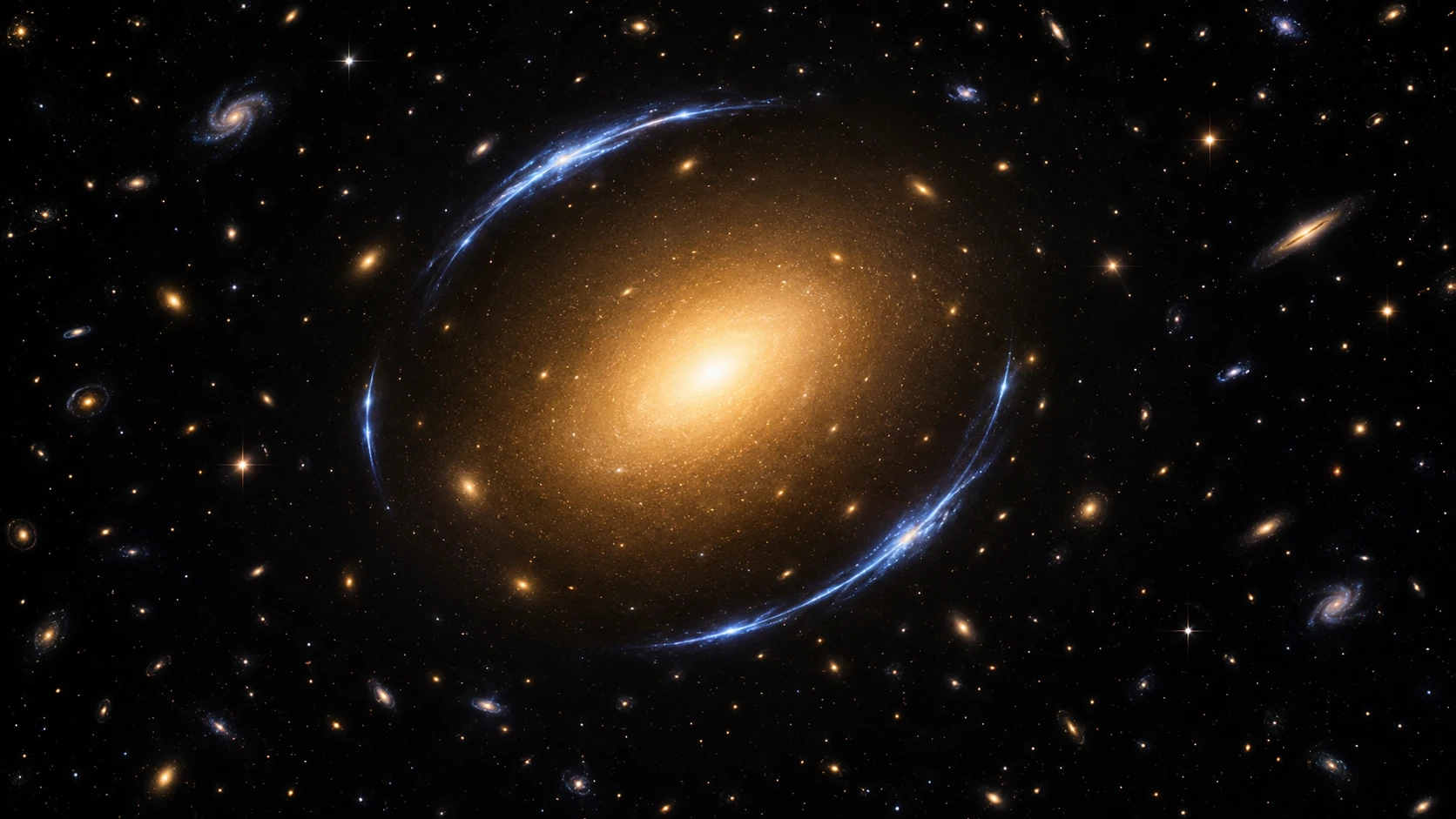
The Euclid space telescope has opened a vast new resource for astronomers: around 13 months of observations containing more than a billion objects. The European Space Agency’s November 12 release, called DR1-Foundation, makes images, catalogs and spectra available for researchers studying how the universe is arranged.
ESA says the material includes more than 900 million galaxies and about 15,000 strong gravitational-lensing candidates. The latter are promising systems for further study, not a count of confirmed lenses.
Primary sourceEuropean Space Agency: “Euclid lays the foundation for its best-ever 3 D map of the Universe”The collaboration’s data-release overview, posted as a preprint on November 12, explains why the release comes in stages. Foundation provides images, spectra and validated catalogs. The full release, scheduled for June 2027, will add galaxy-shape measurements and other products needed to analyze weak gravitational lensing and the clustering of galaxies, two central tools for its cosmology work.
The researchers describe a calibration issue identified earlier this year: the model of how the telescope spreads light underestimated that blur’s size, which would compromise the analysis of subtle shape distortions. They chose to release other validated products while completing the additional processing and cosmological analysis. That distinction separates the substantial dataset now available from conclusions still to be drawn.
Euclid is a European mission with NASA contributions to its instruments and science. NASA’s Jet Propulsion Laboratory supplied infrared detectors, with testing by Goddard Space Flight Center. A science center at Caltech supports U.S. investigators. The mission, launched in July 2023, studies dark matter, dark energy and their roles in cosmic structure and expansion.
For astronomers, the immediate work is to turn the new observations into measured properties and research results. The collaboration says discovery papers will appear as analyses mature, with the remaining parts of the full DR1 release planned for June 2027.
End of story