


Electrified cloth offers a new way to recover phosphate in laboratory tests
A reusable electrode captures the fertilizer nutrient from water and releases it when the voltage reverses.
How this story was made
This story was written with AI assistance from news.northwestern.edu’s source documents. Its figures and quotations were checked against their sources, and Digitalage Desk reviewed and approved it before publication. It is published under the name of Peter Michaels, Editor.
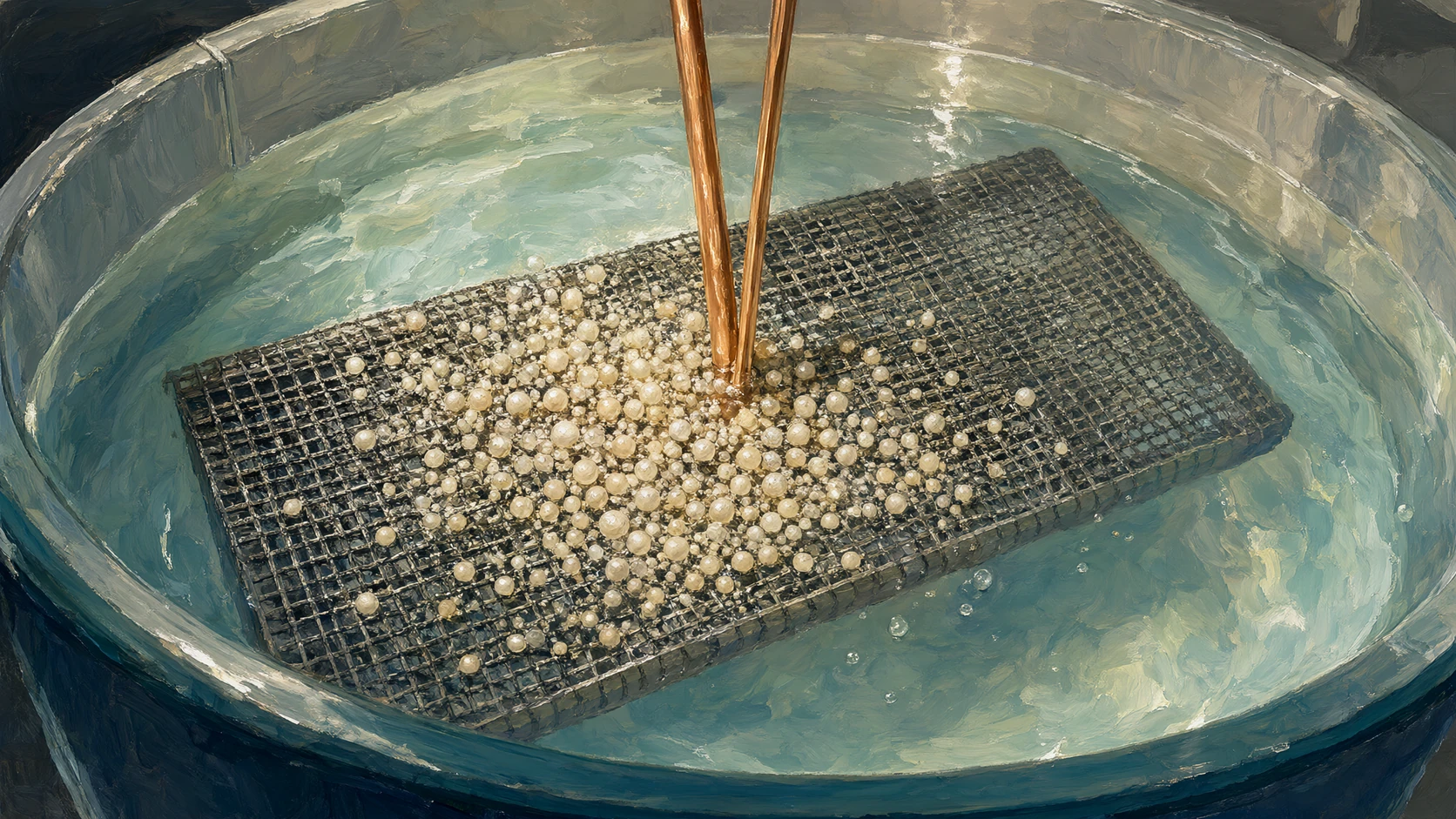
Researchers at Northwestern University and Argonne National Laboratory have developed a reusable material that could help recover phosphate while reducing water pollution. Announced on November 18, the work uses carbon cloth coated with magnetite, a common iron oxide.
In laboratory tests described by Northwestern, applying electricity increased phosphate capture about 2.6-fold compared with the same material without voltage. Reversing the voltage released the phosphate into the surrounding solution, offering a route to recovery without adding chemical regenerants.
Giving a useful nutrient another job
Phosphate has value beyond the treatment process. The Environmental Protection Agency’s phosphorus guide explains that it is the form of phosphorus most commonly used by living organisms. It helps support DNA, cellular energy and cell membranes, and phosphorus is a common ingredient in commercial fertilizers.
The difficulty begins when too much reaches water. Sources include fertilizer runoff, urban runoff, leaking septic systems and wastewater treatment discharges. Excess phosphorus can accelerate algae growth, reduce dissolved oxygen, block sunlight and create conditions in which harmful algal toxins may occur.
Primary sourcenews.northwestern.edu: “Electrified fabric captures phosphate for potential recovery from wastewater”The next step is real wastewater
The researchers applied 1.2 volts across their experimental cell. Their next steps are to test the approach in real wastewater at the same scale, then work toward larger systems. Its performance in operating treatment facilities remains to be established.
Northwestern says the paper was published November 18 in ACS ES&T Engineering. Argonne’s publication record identifies the authors as Kelly Matuszewski, Elias Kallon, Lauren Valentino and Vinayak Dravid.
The laboratory result shows that changing an electrical setting can switch the material between collecting and releasing phosphate, a promising starting point for further recovery research.
End of story