


Bee nest linings offer a clue to plastics that can break down in soil
A study of cellophane bees found a natural polyester with plastic-like properties that degrades in soil, offering a research lead rather than a ready-made replacement.
How this story was made
This story was written with AI assistance from PNAS’s source documents. Its figures and quotations were checked against their sources, and Digitalage Desk reviewed and approved it before publication. It is published under the name of Peter Michaels, Editor.
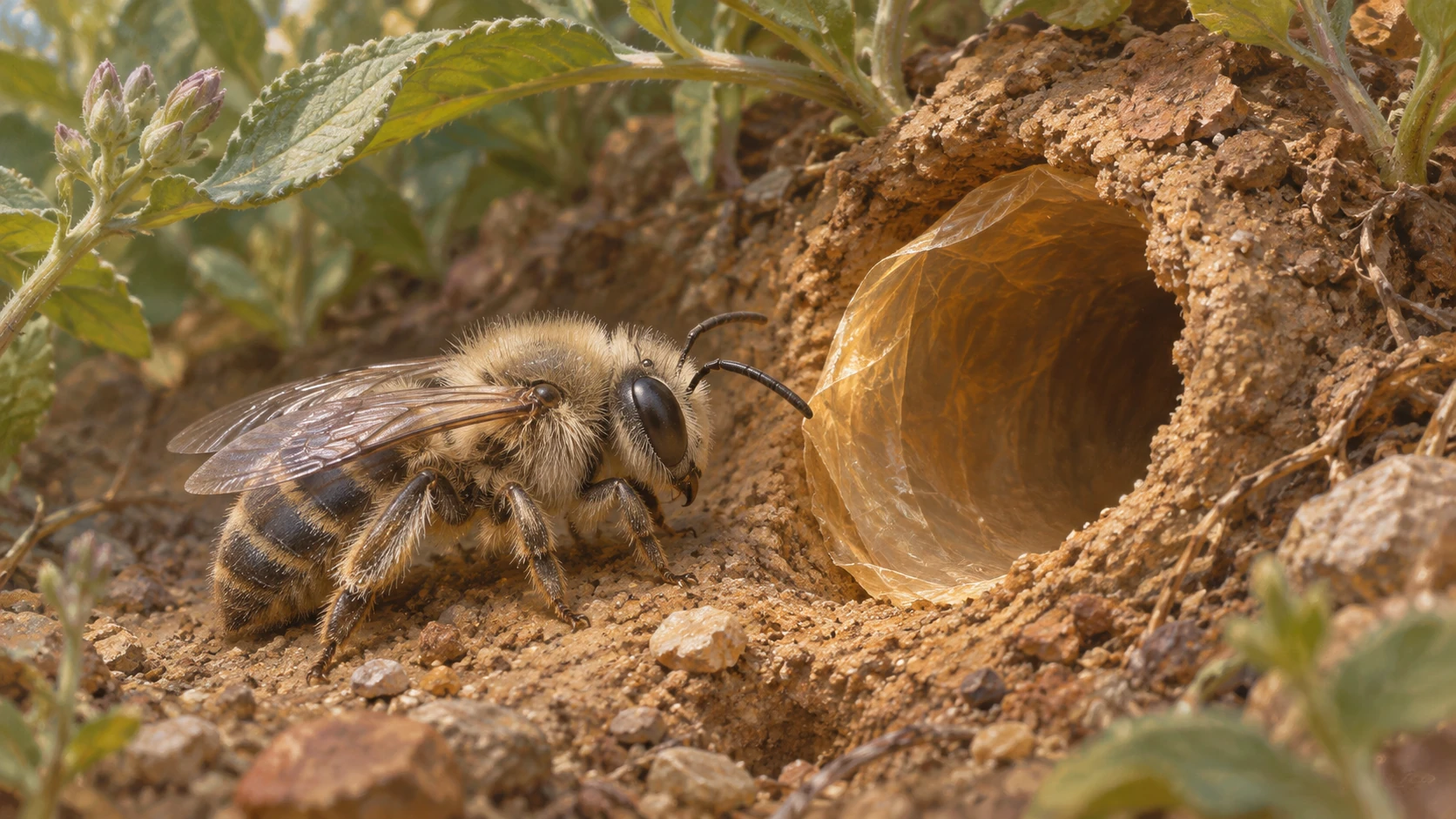
A solitary bee makes an underground nest lining that resembles a plastic pouch. Chemists studying it found an unusual combination: structural features associated with durable plastics, alongside substantial breakdown in ordinary soil.
The November 2 PNAS study examined the cellophane bee Colletes inaequalis. Its lining contains a polyester with some polyethylene-like properties, including a highly ordered crystal structure. Evidence also pointed to links between polymer chains, another feature that can make synthetic materials difficult to degrade.
Yet the polyester fraction of sampled nest linings fell from about 73% to 40% by weight within four months in soil. That measures the composition of the lining, not a 33% loss of its total mass. Enzyme activity may help explain the breakdown, but the mechanism remains under investigation.
Primary sourcePNAS: “Rapid soil degradation of a cross-linked, semicrystalline polyethylene-like polyester produced by Colletes bees”Compostable is more specific than biodegradable. Commercial compostability refers to breakdown under a facility’s controlled conditions, including heat, humidity and biological activity. A product designed for those conditions may behave differently in a backyard pile. EPA advises against home composting plastic unless its label specifically says that use is appropriate.
Nor should compostable plastic automatically go into conventional plastic recycling. EPA says it can contaminate that stream and recommends checking whether local facilities accept it. For consumers, the useful question is what a particular product’s label and local collection service permit, rather than whether its marketing sounds natural.
The Virginia Tech researchers’ goal is to understand and reproduce useful chemistry, not farm bees for packaging. Designing and testing a manufactured material remains ahead.
End of story