


A new model explores why Earth’s rock record has a vast missing chapter
Research links the Great Unconformity to continents rising and sinking over immense spans of time, with glaciers helping remove exposed rock.
How this story was made
This story was written with AI assistance from Nature’s source documents. Its figures and quotations were checked against their sources, and Digitalage Desk reviewed and approved it before publication. It is published under the name of Peter Michaels, Editor.
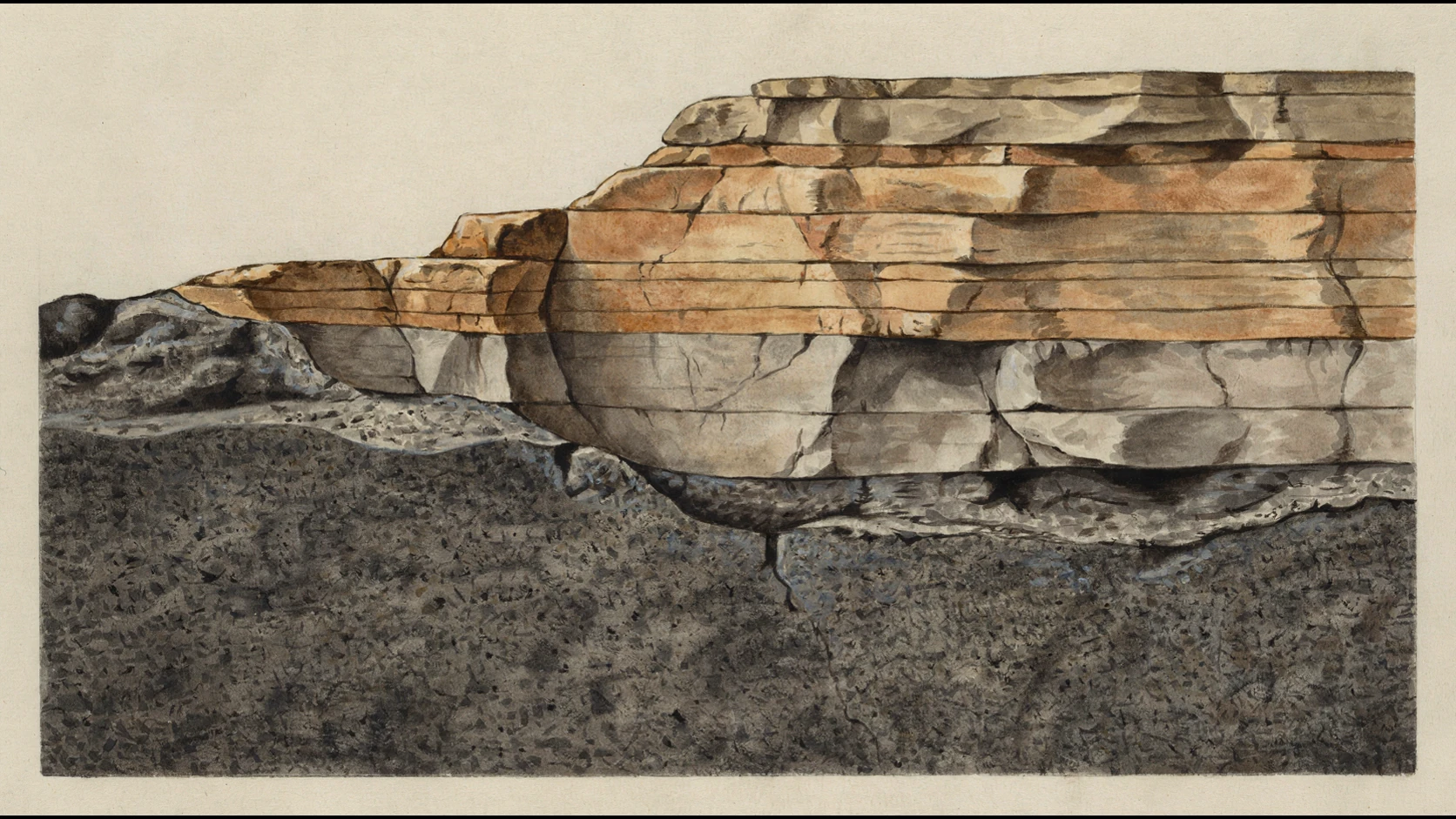
At some geological boundaries, rocks separated by hundreds of millions of years sit directly against one another. A new study proposes that slow movement deep inside Earth helped create those enormous gaps, lifting continents into the reach of erosion and later lowering them beneath protective layers of sediment.
The research, published November 4 in Nature, examines the Great Unconformity, a widespread missing interval in the rock record. Santosh Dhungana and Nicolas Flament of the University of Wollongong tested whether mantle convection could explain both the removal of ancient rock and the preservation of the surface left behind.
The boundary marks a break in the geological record. The National Park Service’s Grand Canyon account describes contacts where erosion or gaps in deposition leave younger material lying on much older rock. Above the canyon’s Granite Gorge, one such contact omits about 1.2 billion years of recorded history. The amount missing varies from place to place.
The new study used six mantle-convection models, starting from reconstructions one billion years ago. They predict prolonged uplift, followed by long-term subsidence, in Laurentia, the ancient core of North America; Baltica, associated with northern Europe; and North China. The boundary is exposed in Laurentia and North China, and mostly inferred beneath younger sediments in Baltica.
The proposed sequence joins processes operating at very different depths. Wollongong’s explanation describes the mantle as hot, solid rock that moves slowly. Its circulation can raise broad areas of land. After a long period exposed to erosion, sinking land allows seas and new sediment to cover the worn surface, helping preserve it.
Glaciers remain part of the explanation. The Nature models place continental uplift during the interval of severe Cryogenian glaciation, allowing ice to erode exposed terrain. The result is a model-supported mechanism, rather than direct observation of ancient mantle motion or a demonstration that every gap formed identically.
Primary sourceNature: “The deep Earth origin of the Great Unconformity”Its geological guide identifies views of major unconformities from Lipan Point and the Yavapai Geology Museum area. Looking for the boundary between contrasting rock packages gives the landscape another dimension: the history that survives, and the history a surface tells us has been lost.
End of story