


Wrist sensors offer a closer look at how stroke recovery unfolds at home
A study used everyday arm movements to measure recovery, testing an assessment tool rather than a treatment that restores movement.
How this story was made
This story was written with AI assistance from National Institutes of Health’s source documents. Its figures and quotations were checked against their sources, and Digitalage Desk reviewed and approved it before publication. It is published under the name of Peter Michaels, Editor.
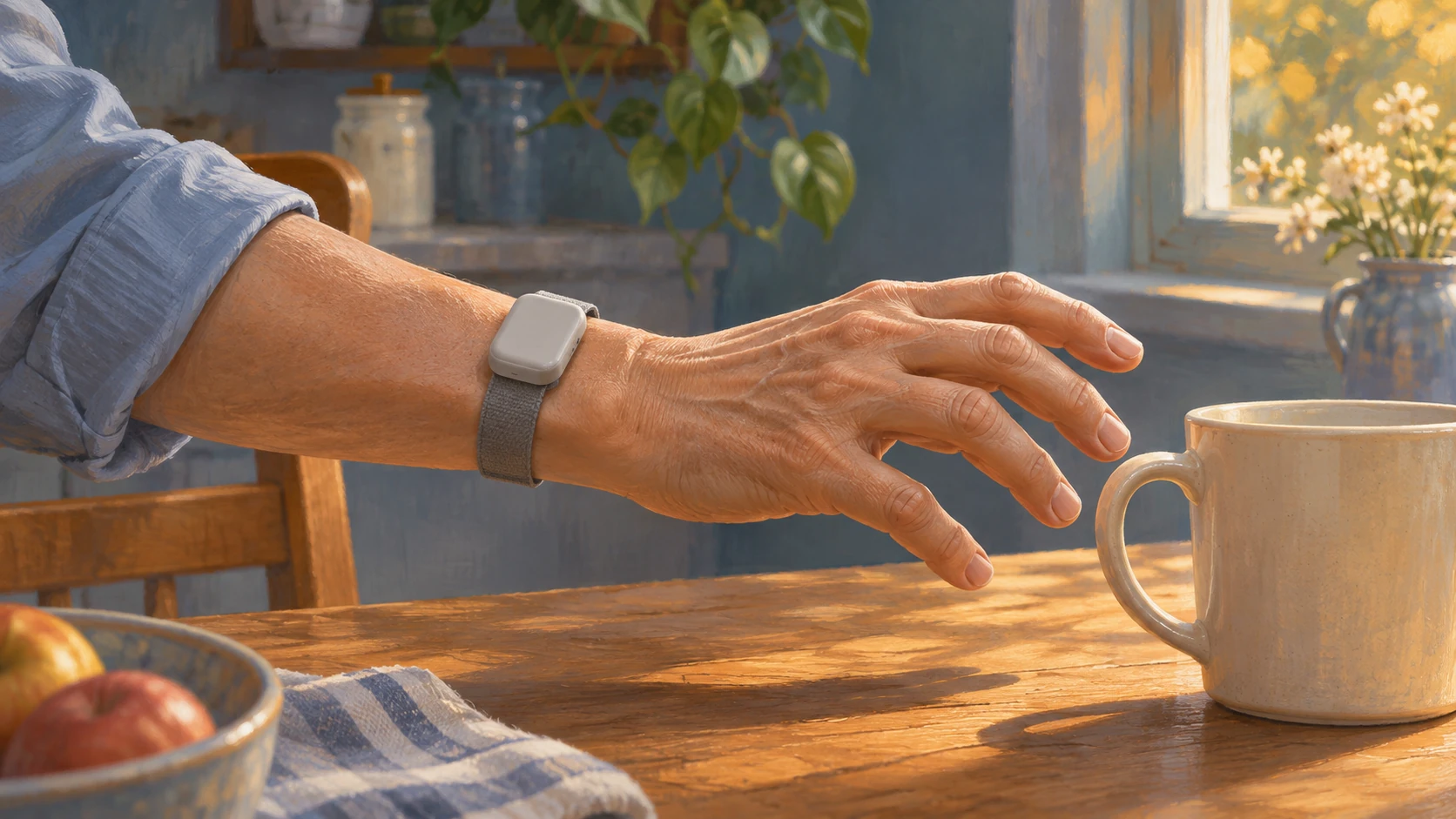
A person recovering from a stroke may move differently at home than during a brief clinic assessment. Researchers have developed a wrist-sensor measure intended to capture that missing picture, tracking ordinary arm movements and relating them to clinical measures of recovery.
The study in Science Translational Medicine, published September 30 and highlighted by NIH in November, analyzed about 23,000 hours of movement data from 215 participants. The researchers called their measure the digital arm performance scale, or DAPS. Its purpose was to assess motor recovery, not deliver rehabilitation exercises or stimulate damaged tissue.
The team broke continuous accelerometer recordings into smaller movement segments, extracted features and combined them into an interpretable score. The paper reports tests of reliability, sensitivity and agreement with established clinical assessments, along with whether the score could distinguish groups and change as people recovered.
NIH’s account of the research describes 61 people who had experienced a stroke within six months and 75 healthy participants in the development data. The researchers also assessed 79 people whose strokes were more than six months earlier. Those groups together make up the 215-person study, rather than separate trials showing that a device improved recovery.
The score could distinguish healthy participants from stroke survivors who had already achieved the highest score on clinical tests. That suggests everyday movement contains information those tests can miss. The researchers also modeled how the measure could change the size of rehabilitation trials; those calculations did not establish that a smaller, newly conducted trial had succeeded.
The work sits within a broader rehabilitation process. The National Institute of Neurological Disorders and Stroke explains that recovery depends partly on the size and location of brain injury. Rehabilitation can involve repeated practice, relearning lost skills and finding ways to work around lasting disabilities, with care delivered in hospitals, clinics or at home.
Primary sourceNational Institutes of Health: “Stroke recovery tracked with wearable device”End of story