


Indiana Dunes turns to native mussels in the Little Calumet River’s recovery
More than 1,600 laboratory-raised fatmucket mussels have been released, with tags allowing researchers to follow survival and possible reproduction.
How this story was made
This story was written with AI assistance from National Park Service’s source documents. Its figures and quotations were checked against their sources, and Digitalage Desk reviewed and approved it before publication. It is published under the name of Peter Michaels, Editor.
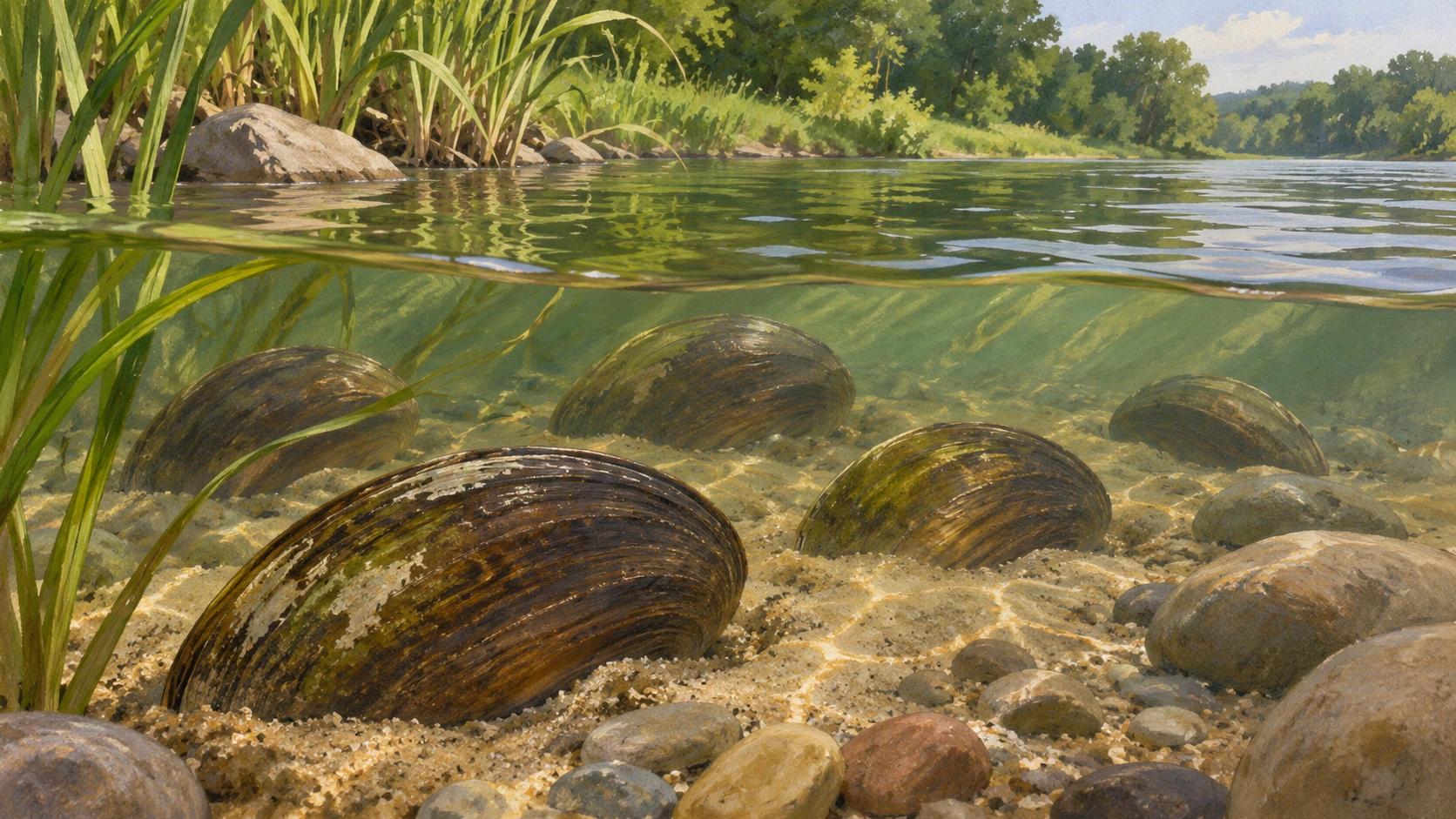
More than 1,600 native freshwater mussels have entered the East Branch of the Little Calumet River in a restoration effort that now faces a longer test: whether the animals survive and help rebuild a population. Indiana Dunes National Park announced the release October 1, describing its first group raised from larvae to subadult size.
The fatmucket mussels began in the park’s propagation laboratory, then grew under natural river conditions until they reached 20 to 30 millimeters. Each carries an identification tag for monitoring.
The river’s losses give the work its context. Indiana’s Department of Natural Resources says the drainage once held nearly 20 native mussel species, based in part on old shells found during surveys. Only a few species remain in separated populations. The agency says the precise causes of that decline are not fully understood.
Its restoration account describes a partnership with the park that uses two ways to produce juveniles: allowing larvae to develop on host fish, and culturing them without a fish in laboratory media. State biologists help by supplying female mussels. That work aims to overcome an early stage of life that is unusually complicated.
As the Missouri Department of Conservation’s fatmucket profile explains, the species begins life as larvae that attach to suitable fish before developing and dropping to the stream bottom. Hosts can include bass, bluegill and other fish. Rebuilding a mussel population therefore depends on more than placing shells in water; the surrounding aquatic community matters too.
Primary sourceNational Park Service: “Indiana Dunes National Park Releases 1600 Lab Grown Native Mussels into the Little Calumet River to Improve Water Quality”The park’s next task is to use the tags to follow growth, movement and survival. Surveys over coming years will also look for reproduction, the step that would show the stocked animals contributing to another generation.
Visitors are asked to leave mussels and shells undisturbed. The park warns that handling them or placing them incorrectly can kill the fragile animals.
End of story