


Hera reveals an asteroid’s rugged surface as DART follow-up moves closer
New views of Didymos and its partly hidden moonlet begin a close investigation of the asteroid system NASA deliberately struck in 2022.
How this story was made
This story was written with AI assistance from European Space Agency’s source documents. Its figures and quotations were checked against their sources, and Digitalage Desk reviewed and approved it before publication. It is published under the name of Peter Michaels, Editor.
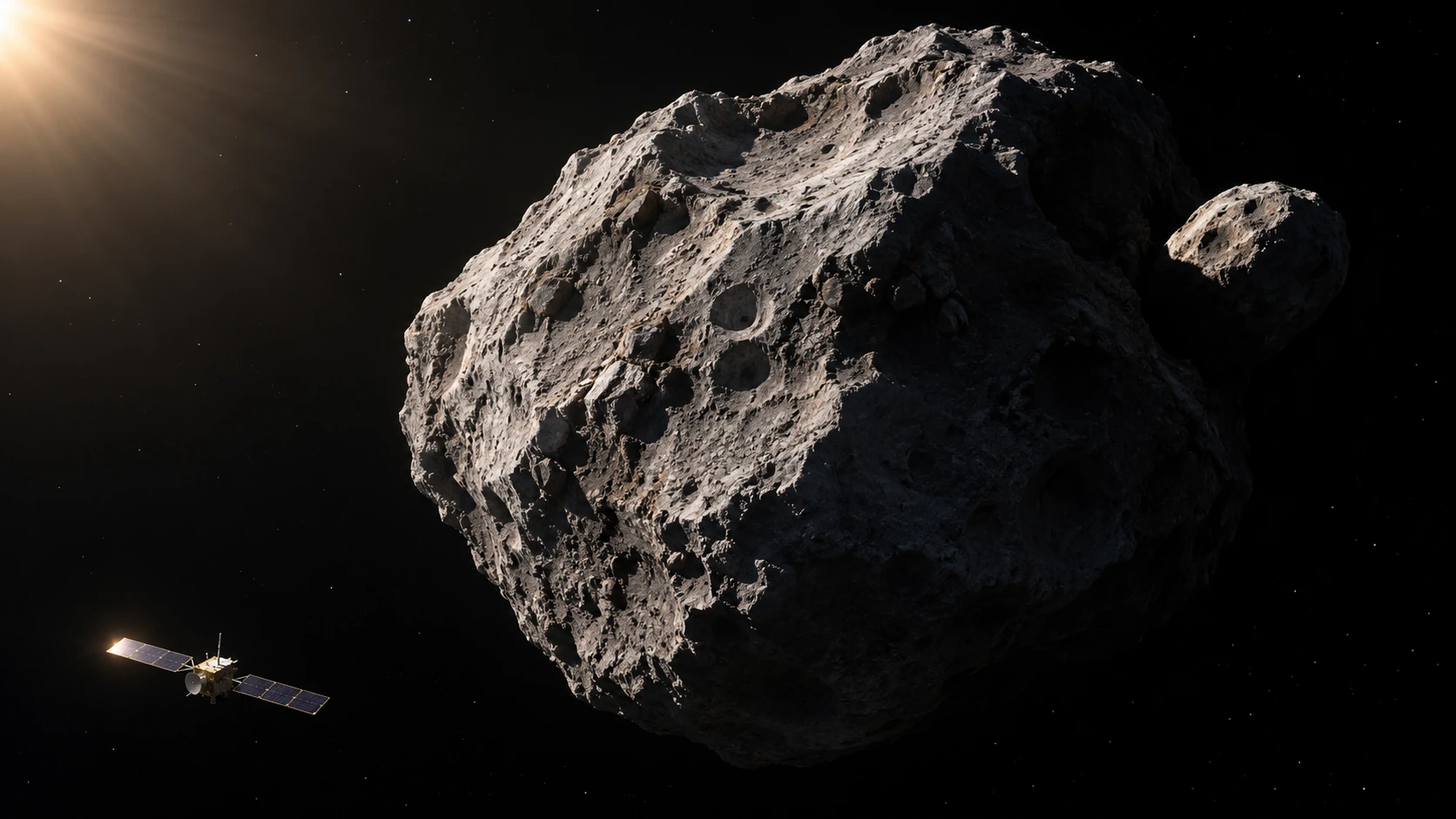
Four years after NASA deliberately crashed a spacecraft into an asteroid moonlet, Europe’s Hera mission is beginning the close inspection needed to understand what that collision changed. Its latest images show a rocky landscape with large boulders, smoother patches and a sharply defined ridge.
In a November 12 image release, the European Space Agency showed Didymos from about 56 kilometers away. The larger asteroid is roughly 780 meters across. Its much smaller companion, Dimorphos, peeks out from behind it, leaving much of the target scientists want to study hidden from view.
Primary sourceEuropean Space Agency: “Hera spies a half-hidden asteroid moonlet”NASA’s initial analysis also identified an important complication: material blasted off the asteroid added to the push. Understanding that recoil requires information about the target’s surface and physical structure, not just the speed of the incoming spacecraft. Neither asteroid posed a threat to Earth during the controlled test.
That is where Hera comes in. The German Aerospace Center’s November 12 update says the mission will study the pair for at least six months, mapping their shapes, surfaces and internal structures. Its camera observations will support three-dimensional models and a closer examination of possible impact-related changes.
The larger asteroid has its own puzzles. Didymos rotates about once every 2.2 hours. Researchers are examining whether that rapid spin helped move material toward the equator and build its ridge. Models also suggest that material shed by the larger body could help explain the moonlet’s origin, but the new pictures alone do not settle that history.
Hera also carries two small CubeSats intended to investigate at closer range, with eventual landing attempts planned. These are future operations, while the early images provide a first look at the terrain the mission must navigate and interpret.
What’s next
The next public image milestone is November 25, when detailed views of Didymos and Dimorphos are scheduled for release. They should give scientists and the public a clearer look at the system behind the first full-scale asteroid-deflection test.
End of story