


Google books New Glenn launch for its space-based AI research
Blue Origin targets a first-quarter 2029 mission for Project Suncatcher, following Google’s earlier prototype flight to test computing hardware in orbit.
How this story was made
This story was written with AI assistance from Google’s own announcement. Its figures and quotations were checked against their sources, and Digitalage Desk reviewed and approved it before publication. It is published under the name of Peter Michaels, Editor.
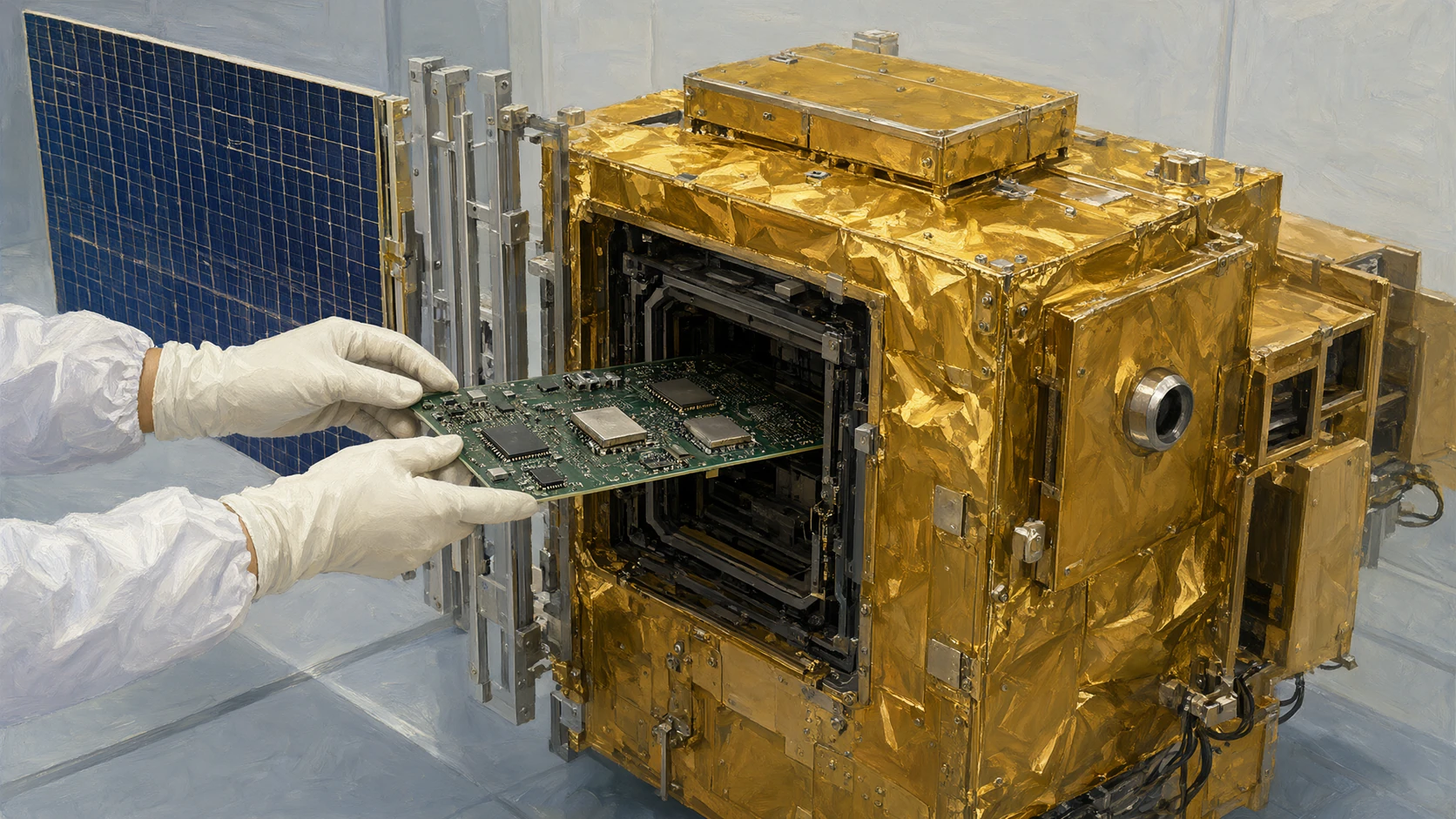
Google has signed a launch-services agreement with Blue Origin for a dedicated Project Suncatcher mission, giving its research into computing in space a heavy-lift launch target. The companies announced the agreement November 19, with a New Glenn mission targeted for the first quarter of 2029.
Primary sourceGoogle: “Google: blue origin project suncatcher partnership”Satellites at the scale of a server rack
In Google’s announcement, each planned satellite is described as having computing capacity roughly comparable to a data-center rack. New Glenn would deploy them into sun-synchronous orbit.
Google describes this as Suncatcher’s first dedicated heavy-lift launch and says it builds on work with other satellite and launch partners. Neither company’s November 19 statement discloses the number of satellites or the agreement’s financial terms.
The rack comparison describes the intended scale of the payloads. It does not establish the total capacity of a future constellation or the performance customers could expect from an operational service.
An earlier prototype is testing the hardware
The new agreement follows an October 1 prototype mission. Google said a satellite built with Planet had launched aboard SpaceX’s Transporter-18 rideshare mission, that contact had been established and that the spacecraft was operating as expected.
That mission was intended to gather measurements of how TPUs withstand launch stresses, radiation and temperature extremes. Google said the findings would help refine subsequent designs.
The company’s original research overview, published in November 2025, identifies other engineering challenges, including high-bandwidth links between satellites and the behavior of closely arranged spacecraft in orbit. Its proposed architecture uses optical links to connect the computing satellites.
The November 19 agreement adds a launch partner and a target quarter to that research program. Whether the approach can scale remains the question the hardware tests and future missions are intended to answer.
End of story