


Fossil carbon emissions may dip in 2026, but total CO2 is still projected to rise
The Global Carbon Budget forecasts a small fossil-fuel decline, with uncertainty and rising land-use emissions complicating the picture.
How this story was made
This story was written with AI assistance from Global Carbon Budget’s source documents. Its figures and quotations were checked against their sources, and Digitalage Desk reviewed and approved it before publication. It is published under the name of Peter Michaels, Editor.
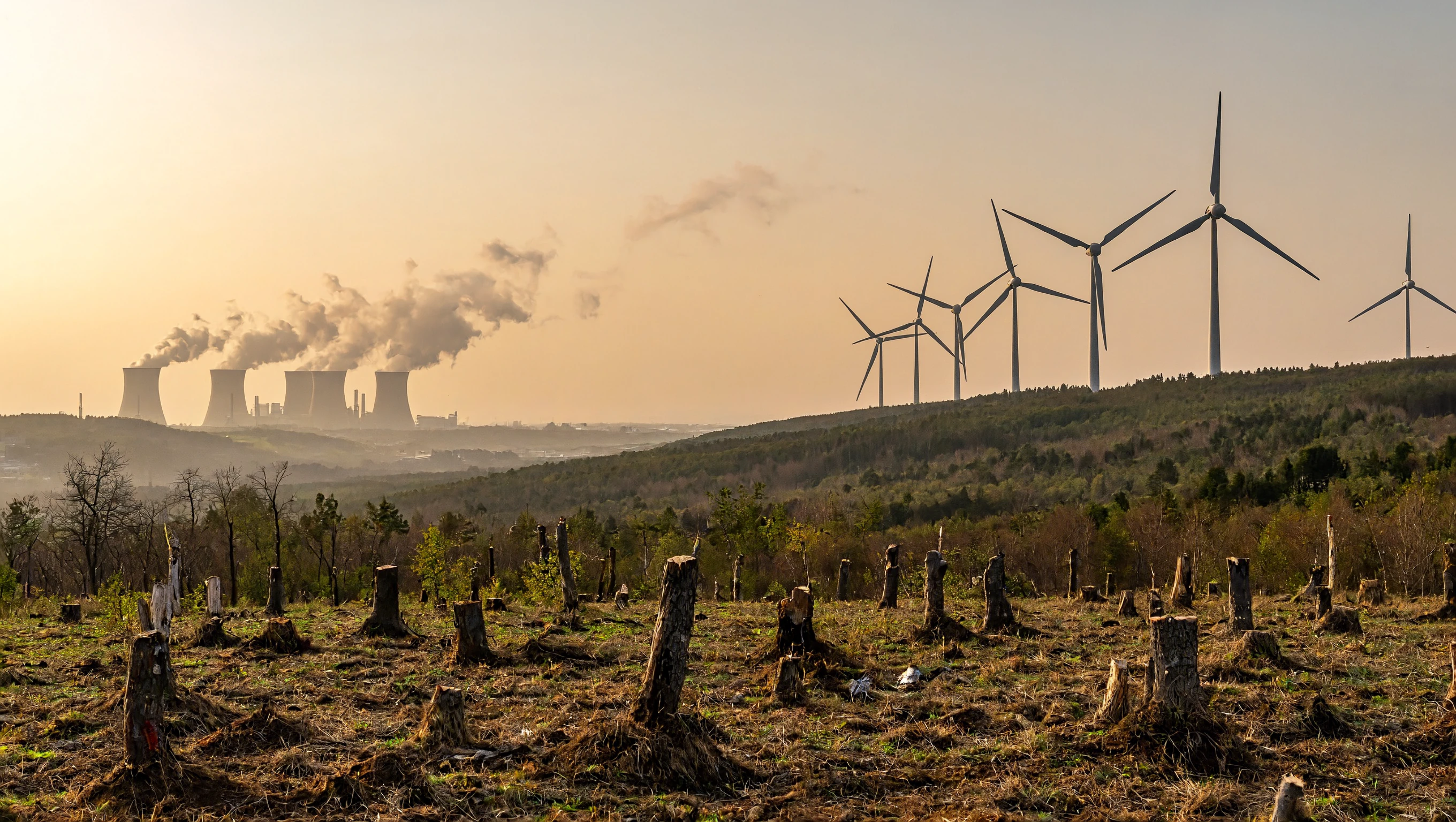
Global carbon dioxide emissions from fossil fuels are projected to fall slightly in 2026, but the latest Global Carbon Budget does not point to a lasting global peak. When emissions from land-use change are included, the total is expected to rise.
The November 10 assessment puts fossil CO2 emissions at 38.2 billion metric tons, down 0.4%. Total CO2 emissions are projected at 43.3 billion metric tons, compared with 42.8 billion in 2025, as an increase from land-use change outweighs the small fossil decline.
Even the direction of the fossil-fuel change remains uncertain. The budget’s research preprint gives a range from a 1.5% decrease to a 0.6% increase. Released for journal review, it describes the 2026 figures as preliminary estimates rather than a completed annual inventory.
A companion peer-reviewed analysis in Nature Climate Change finds that electric vehicles, solar power and wind power could offset roughly two-thirds to four-fifths of the emissions growth associated with rising demand through 2028. In its scenarios, clean technology still needs to expand faster to secure a durable decline.
The immediate reduction is partly tied to an energy shock. The researchers project oil emissions falling 1.9% and gas emissions 0.3%, while coal emissions rise 0.6%. They describe the Iran conflict’s effect on oil use as likely temporary, distinguishing it from lasting changes in energy supply and transport.
There is evidence of broader progress: 59 countries emitted less fossil CO2 in 2025 than in 2019 while their economies grew, the Nature analysis reports. But a six-year decline in a country does not establish that its emissions can never rebound.
The land-use side adds another pressure. The budget projects 5.1 billion metric tons of CO2 from land-use change this year, with increased peat fires and forest degradation in Southeast Asia. Drier conditions linked to a developing El Niño contribute to that increase, according to the research team.
Primary sourceGlobal Carbon Budget: “Fossil CO2 emissions decrease in 2026”The accounting combines energy and cement-production data, land-use models, atmospheric measurements and estimates of carbon absorbed by land and oceans. The authors identify continuing uncertainty in land-use emissions and disagreement among some natural-sink estimates. Those limits matter when interpreting a projected global change as small as four-tenths of a percent.
End of story