


First takahē chick marks a new milestone for New Zealand’s Farewell Spit restoration
The October hatch follows the relocation of eight birds to a carefully prepared home in May.
How this story was made
This story was written with AI assistance from doc.govt.nz’s source documents. Its figures and quotations were checked against their sources, and Digitalage Desk reviewed and approved it before publication. It is published under the name of Peter Michaels, Editor.
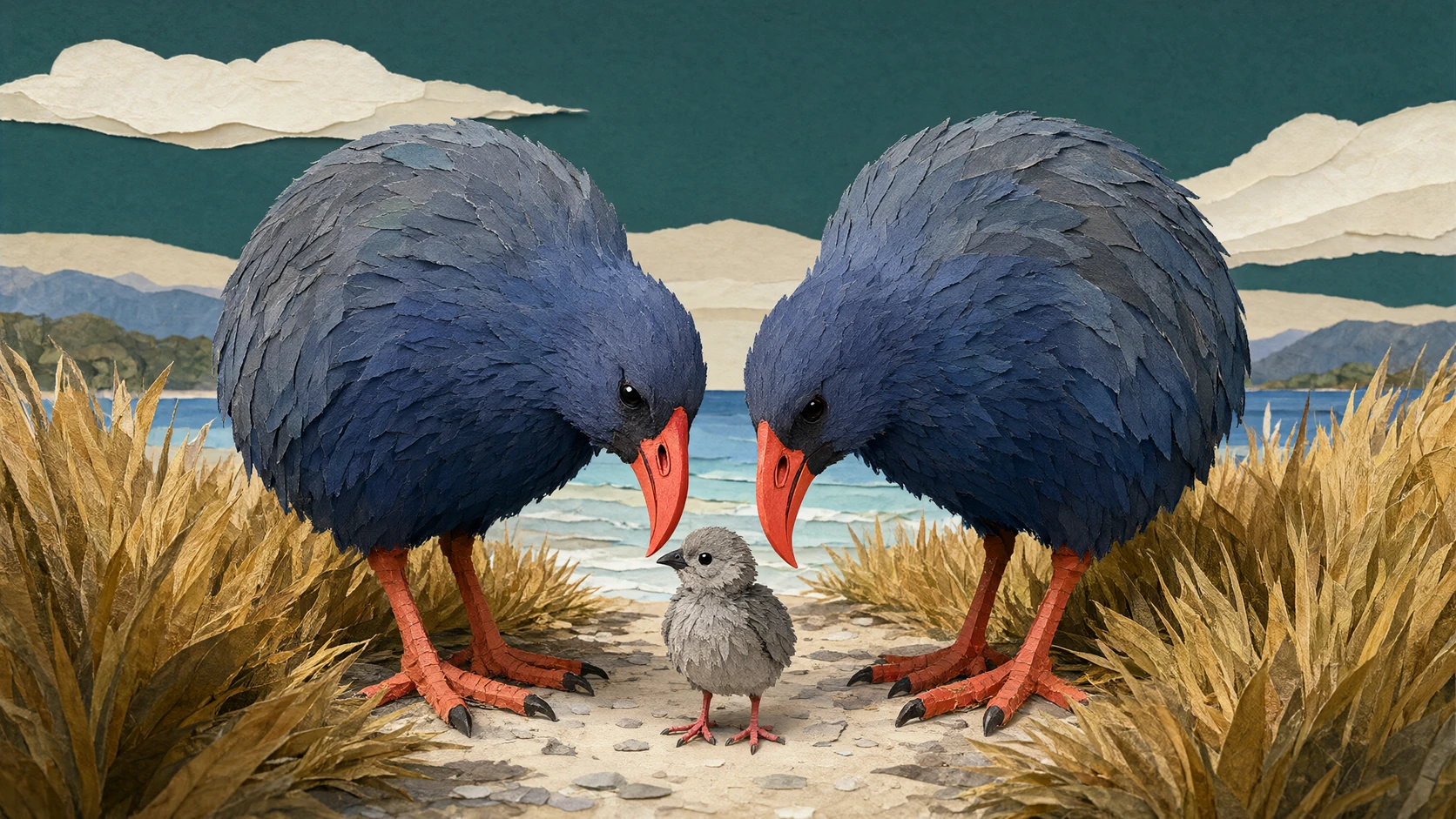
A takahē chick has hatched at Pūponga, near New Zealand’s Onetahua/Farewell Spit, the Department of Conservation and its restoration partners announced on November 18.
The hatch happened in early October. Its parents arrived among eight takahē moved from Gouland Downs on May 27. They formed a new breeding partnership after settling into the area.
Preparing a place to thrive
The birds’ arrival followed years of trapping and habitat work. A newly completed, four-kilometer fence resistant to predators helps protect about 2,000 hectares of habitat within the larger restoration landscape.
Project partners include Manawhenua ki Mohua, HealthPost Nature Trust, Pest Free Onetahua and the Department of Conservation. Volunteers helped prepare the site, including modifying water troughs and building a diversion fence to protect birds from vehicles.
A recovery measured in generations
Primary sourcedoc.govt.nz: “doc.govt.nz: new takahe chick a boost for conservation at onetahuafarewell spit”In the wild, they mainly eat the starchy bases of tussock and sedge leaves, along with tussock seeds when available.
Their history gives the new arrival particular resonance. After being presumed extinct for nearly 50 years, takahē were rediscovered in 1948 in the remote Murchison Mountains. The discovery began a conservation effort that has used breeding programs, transfers to islands and releases into the wild.
Introduced mammalian predators remain their biggest threat. Deer also compete with the birds for the tussock plants that supply food and habitat. The broader recovery program aims to establish populations that can sustain themselves in the South Island’s native grasslands.
The chick remains vulnerable, so protection work continues. Visitors are being asked to watch takahē from a distance. For the teams caring for this habitat, the first hatch is an encouraging early result.
End of story