


New images reveal Amy Beach’s original notes beneath layers of paper
Library of Congress researchers used light and image processing to examine a violin sonata manuscript, beginning to expose choices hidden under the composer’s pasted edits.
How this story was made
This story was written with AI assistance from Library of Congress blogs’s source documents. Its figures and quotations were checked against their sources, and Digitalage Desk reviewed and approved it before publication. It is published under the name of Peter Michaels, Editor.
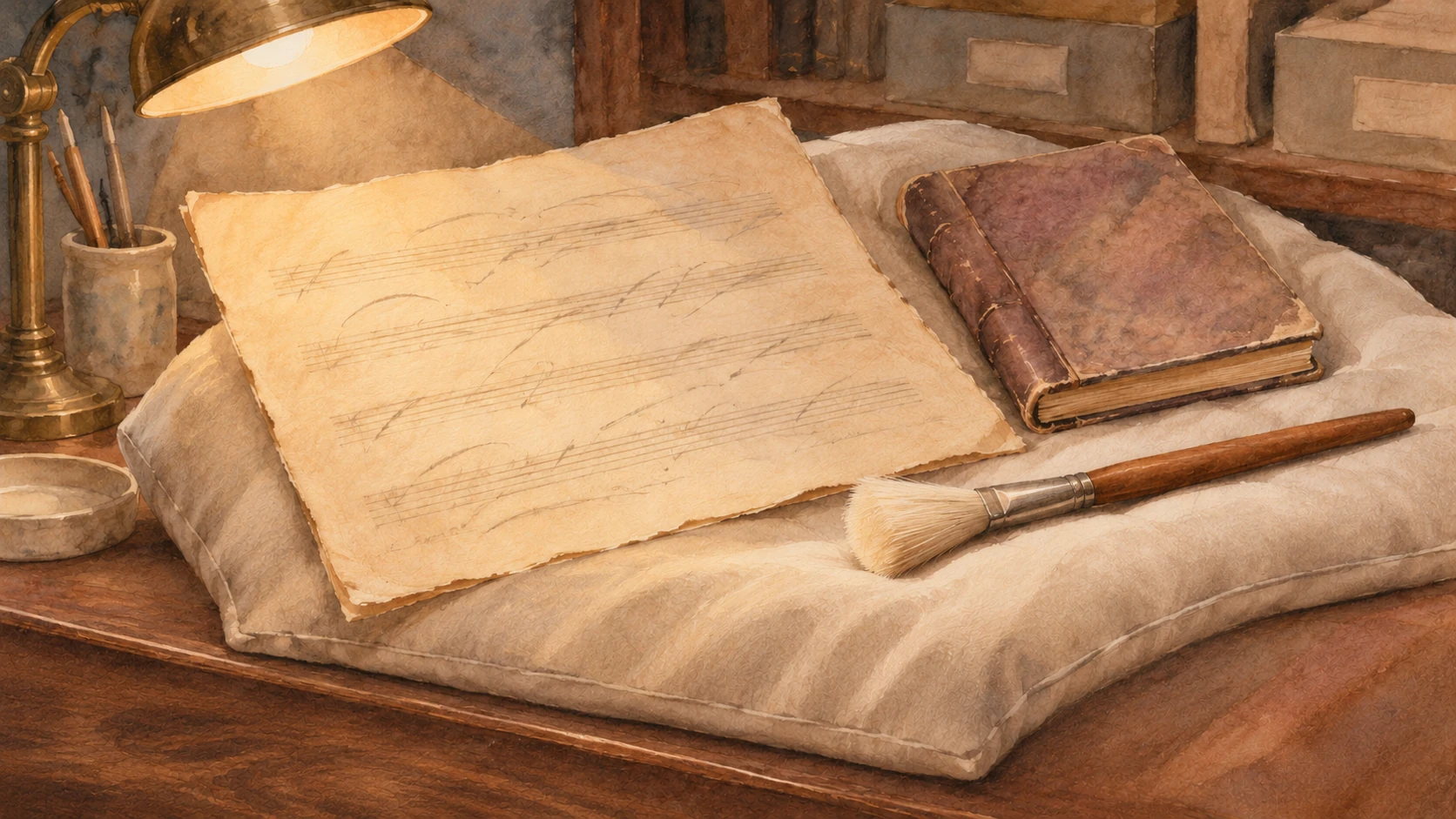
Amy Beach’s original notes hidden beneath her revisions to her Violin Sonata are becoming visible again, more than a century after she covered them with pieces of paper. Library of Congress staff reported in November that scientific imaging had revealed concealed notation without requiring those pasted layers to be removed.
Why it matters
Primary sourceLibrary of Congress blogs: “A Change of Tune: Revealing Amy Beach's Musical Sketches and Revisions”The method draws on a broader preservation tool kit. In its scientific-imaging overview, the Library explains that multispectral imaging records objects under bands of ultraviolet, visible and infrared light. Material that is difficult to distinguish in ordinary light can respond differently across those bands, helping reveal information beyond a conventional photograph.
For Beach’s manuscript, researchers shone light through the pages from below. Image processing then assigned different colors to overlapping ink, helping separate original notation from later revisions and marks on the reverse side. The colors are analytical aids, not a claim about the ink’s original appearance.
The sonata sits within a much larger body of work. The Library’s guide to Beach’s manuscripts identifies major holdings in the A.P. Schmidt Company archives, including her Gaelic Symphony, Mass in E-flat and many songs. Beach and violinist Franz Kneisel premiered her Sonata for Violin and Piano, Op. 34, the work at the center of the imaging project.
The guide also offers a practical clue for readers who want to explore further: some records identify the composer as Mrs. H.H.A. Beach. Searching only her modern familiar name can therefore miss relevant catalog entries. The manuscripts are distributed across several Music Division collections, rather than held in one dedicated Beach archive.
The Music Division hopes to make the new images available on the Library’s website. No release date was announced, leaving broader access to the recovered musical layers as a hoped-for next step for the project.
End of story