


Culture & LifestyleArt and museums
A new Smithsonian show reveals the art behind America’s postage stamps
Opening November 20, the National Postal Museum exhibition pairs finished stamps with sketches, original artwork and rejected designs.
How this story was made
This story was written with AI assistance from Smithsonian Institution’s source documents. Its figures and quotations were checked against their sources, and Digitalage Desk reviewed and approved it before publication. It is published under the name of Peter Michaels, Editor.
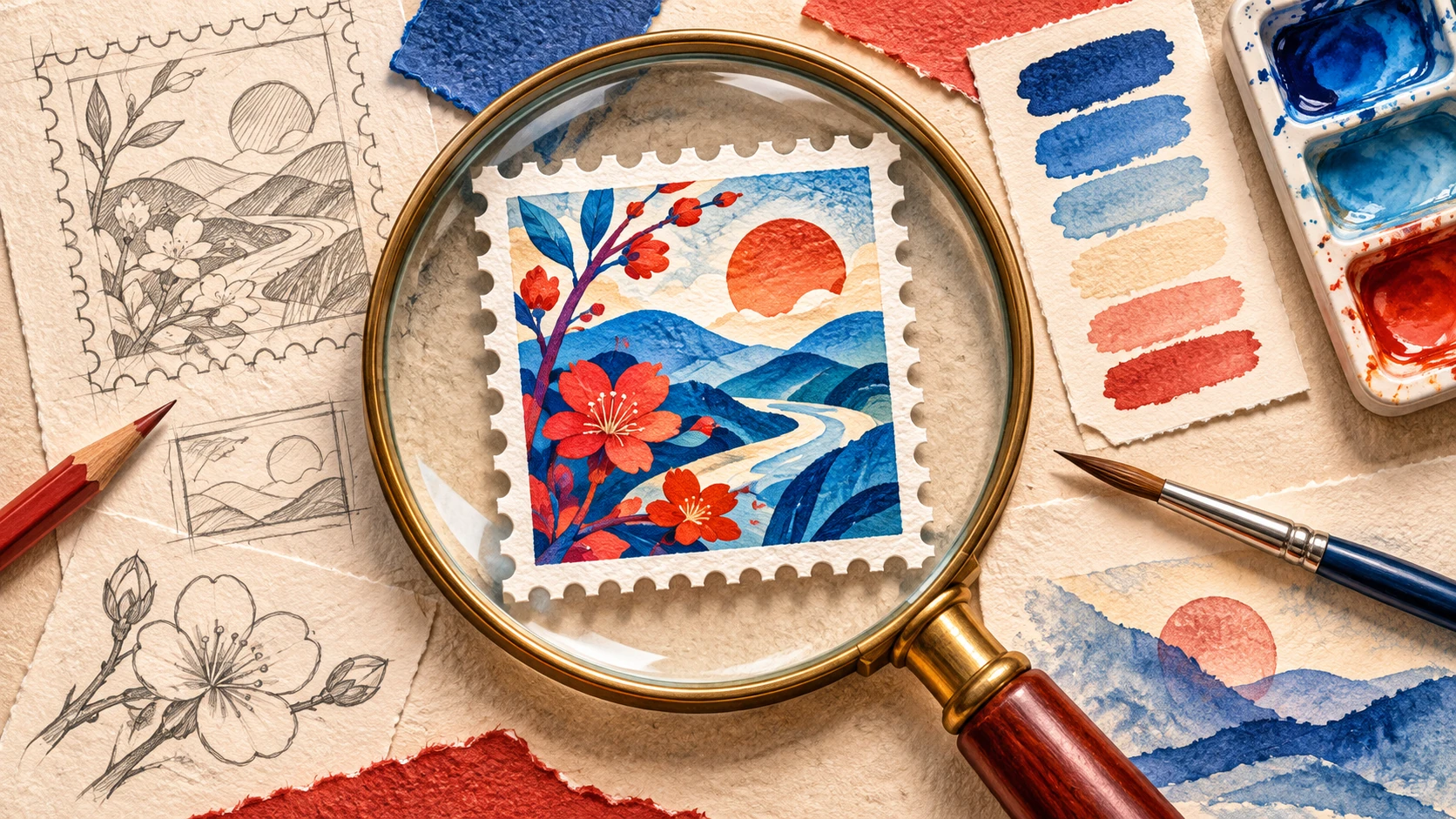
A postage stamp reaches an envelope after its artistic decisions have been made. A new Smithsonian exhibition will show some of the possibilities that came before the finished image, including designs that were never issued as stamps.
“American Stories, American Stamps” is scheduled to open November 20 at the National Postal Museum in Washington. Presented in English and Spanish, the exhibition will feature rotating displays through 2029.
The Smithsonian says the show brings original artwork, sketches and production materials together with completed stamps. Its examples include the typography of the 2013 Emancipation Proclamation stamp and the 2017 solar-eclipse stamp, whose heat-sensitive ink reveals an image of the moon when touched.
Primary sourceSmithsonian Institution: ““American Stories, American Stamps””Who decides what belongs on a stamp?
The exhibition draws on the Postmaster General’s Collection and also explains how proposed subjects move toward approval. That process offers a connection between the gallery and the public.
The U.S. Postal Service’s Citizens’ Stamp Advisory Committee considers suggestions for future stamp subjects. Members recommend ideas to the postmaster general, who gives final approval.
People can propose a subject in writing by postal mail, including relevant historical information and dates. USPS says proposals should arrive at least three years before the intended issue because stamp programs are developed well in advance.
Suggesting a subject and designing its stamp are separate processes. USPS works with professional art directors and artists, and says it does not consider unsolicited stamp designs. A proposed subject also brings no payment or credit if it is selected.
For a visitor inspired by the exhibition, that distinction makes the next step clearer: an idea for whom or what to commemorate follows a different route from an artist’s portfolio.
Planning a visit
The museum is across from Union Station at 2 Massachusetts Avenue NE. Its visitor information says admission is free and tickets are not required.
The exhibition offers a reason to look closely at an everyday object: not just whose portrait or which landmark appears on a stamp, but how the image was chosen and how an artist made it fit.
End of story